

01 / PROBABILITY
Probability behind the price
Convert decimal odds into implied probabilities, then account for the bookmaker’s margin. A high price alone does not make a selection good value.
18+ For research and education. Odds analysis does not guarantee results or profits.
Follow opening and closing prices from 24+ bookmakers. Compare past matches and investigate price movement with the OddsTips historical odds archive.



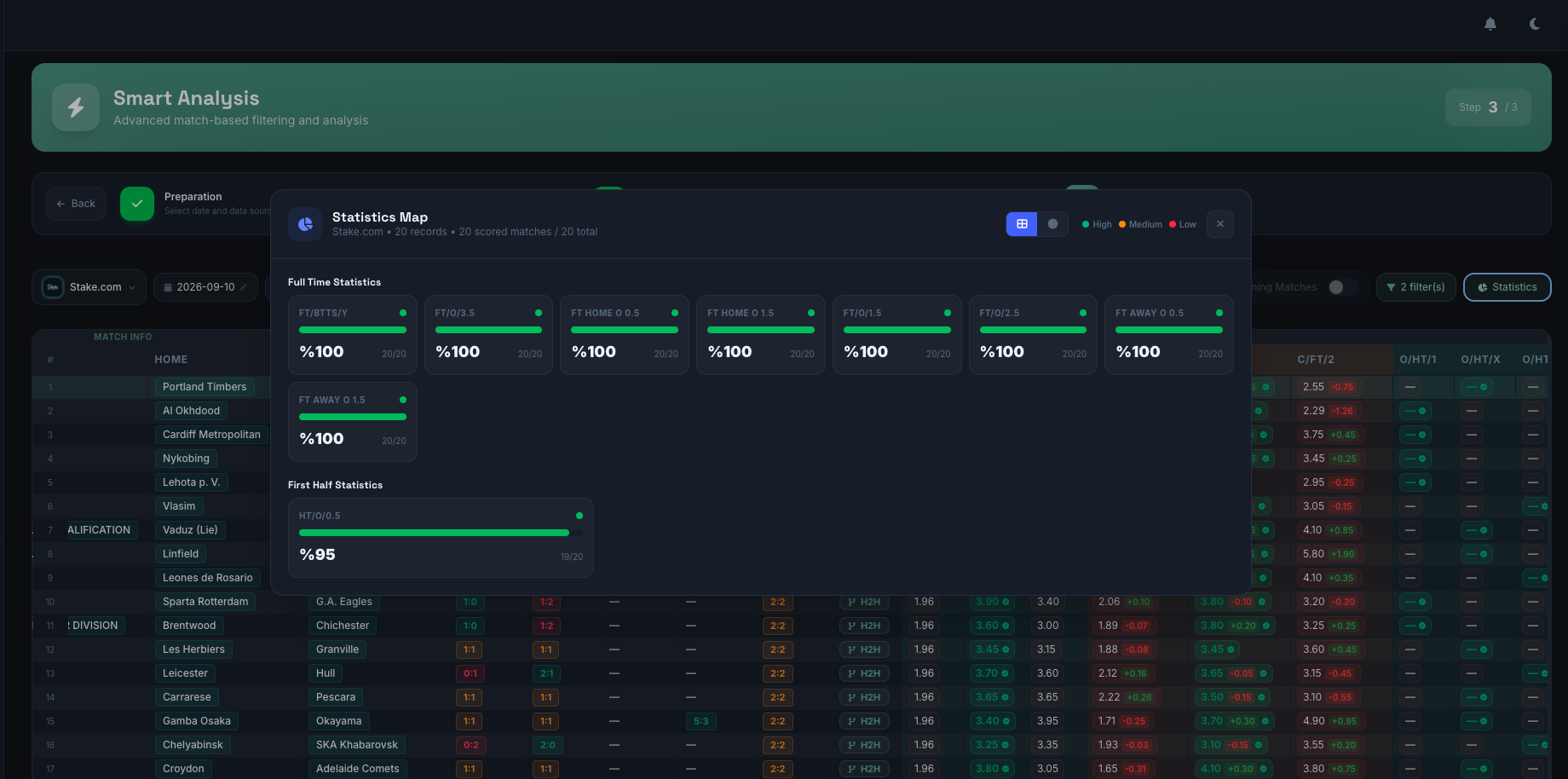
Historical odds capture what a market expected at a particular moment. Read prices alongside probability, bookmaker margin and the information available at the time.
Learn how to compare oddsConvert decimal odds into implied probabilities, then account for the bookmaker’s margin. A high price alone does not make a selection good value.
Trace how a price changes before a match. Check the timing, team news and other bookmakers before drawing conclusions from a shortening price.
Find past matches with similar odds and inspect their results. Keep the market, league and time window consistent, and always check the sample size.
Turn an odds archive into a clear research question, then work through the evidence in four steps.
Start with a sport, league, bookmaker and period that fit your question.
Match the selection, line and settlement rules, then set your odds range.
Look at comparable records, their results and the number of distinct matches.
Check price movements against team data, timing and the limits of your sample.
Set your own filters, find comparable matches or explore model signals. Choose the workflow that fits your research.
Choose your own filters to investigate specific leagues, bookmakers and historical price ranges.
Use a selected match as a starting point to find historical records with similar odds.
Scan and group matches that meet defined criteria across your selected coverage.
Explore AI odds analysis with OddsTips and learn what its price signals measure. A model confidence score is a research indicator, not a verified win probability.
Explore statistical patterns from historical matches and review model confidence scores for supported markets.
Review head-to-head history and comparable past prices, with changing teams and conditions in mind.


Bookmaker names identify data sources. No affiliation or endorsement is implied. Coverage varies by sport, market and date.
Explore football, basketball, tennis and ice hockey odds. Compare like with like: each market has its own lines, outcomes and settlement rules.
Work through a decimal-odds example and learn why implied probability is not the same as a fair-price estimate.
Read the guide →Compare a recorded price with a consistent closing benchmark, and separate price movement from actual returns.
Read the guide →Avoid misleading comparisons by checking sample size, missing records and the information available at the time.
Read the guide →Start with the data, the comparison and the limits of what past prices can tell you.
Read all FAQs ↗Historical betting odds are prices recorded at earlier points in a market. They help you compare opening and closing odds, bookmaker differences and the prices available before past matches. Coverage depends on the data source, sport, market and date.
Match the event, market, selection, line and settlement rules first. Then compare prices recorded at the same time, and consider bookmaker margin. A higher decimal price alone does not establish positive expected value.
Each sport has different scoring patterns and market rules. Keep comparisons within a consistent sport, market, time period and settlement scope. A filter that looks useful in one sport may not transfer to another.
No. Historical prices and results provide research context. They do not guarantee the outcome of another match or a profit. Every event brings new information, uncertainty and risk.
Explore the OddsTips archive, compare bookmakers and bring more context to the way you read betting odds.
18+ · Gamble responsibly · For research and education